
The molon labe meaning fits in three words: come and take them. That was the answer, as Plutarch tells it, that King Leonidas of Sparta sent back when the Persian king Xerxes ordered the Greeks at Thermopylae to hand over their weapons. More than two thousand years later, Texans sewed the same idea onto a homemade flag and fired the first shots of their revolution under it.
Two phrases, two languages, one message: you want it, you’re going to have to come get it. Here is where each one actually comes from, what the record says and what it doesn’t, and why the words still hit as hard as they do.
In this guide
Molon labe meaning at a glance
- Molon labe (μολὼν λαβέ): ancient Greek, literally “having come, take.” Usually translated “come and take them.”
- Who said it: King Leonidas I of Sparta, according to Plutarch, in reply to Xerxes before the Battle of Thermopylae in 480 BC.
- Come and Take It: the American version. Shouted at Fort Morris, Georgia, in 1778 and flown on a flag at Gonzales, Texas, in 1835.
- What both mean today: a refusal to disarm or surrender, most often tied to the Second Amendment.
What does molon labe mean, word for word?
Molon (μολών) is a past participle of the Greek verb for “to come.” Labe (λαβέ) is a command form of the verb “to take, to seize.” Put together, the grammar says the coming happens first and the taking second: having come, take. English needs two verbs joined by “and,” so the standard translation is “come and take them,” with “them” meaning the weapons.
That’s the whole thing. No speech, no threat spelled out. Spartans were famous for saying a lot with almost nothing, which is where we get the word “laconic,” from Laconia, the region around Sparta. That is the molon labe meaning in full, and it is the most laconic sentence ever carved in stone.
Molon labe and the stand at Thermopylae
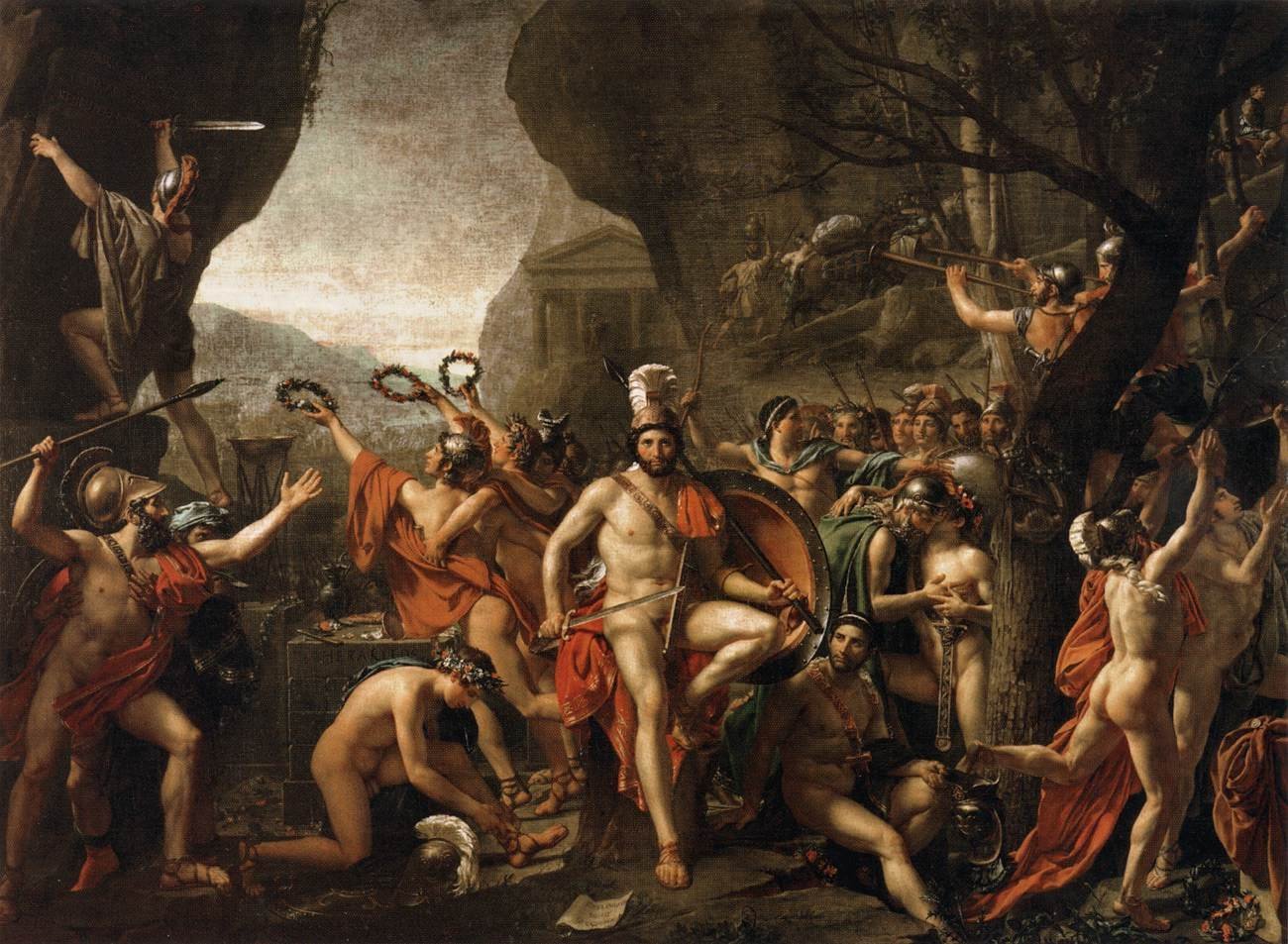
In 480 BC Xerxes marched an enormous Persian army into Greece. A small Greek force, with 300 Spartans under Leonidas at its core, blocked the narrow pass at Thermopylae between the mountains and the sea. They held it for days. When a local showed the Persians a mountain path around the pass, Leonidas sent most of the allies away and stayed with his Spartans and a few others. They fought until they were killed.
The molon labe exchange comes from Plutarch’s Sayings of Spartans, part of his Moralia. In his telling, Xerxes wrote to Leonidas demanding that he hand over his arms, and Leonidas wrote back two words: molon labe. Plutarch collected dozens of these short Spartan comebacks, and this one became the most famous of them all. You can read the passage in the molon labe entry on Wikipedia, which cites it as Moralia 225D.
Did Leonidas really say molon labe?
Straight answer: nobody can prove it. Plutarch wrote in the late first or early second century AD, roughly 500 years after the battle. Herodotus, the closest thing we have to a contemporary historian of the Persian Wars, records no conversation between Xerxes and Leonidas at all. Diodorus Siculus describes a similar back-and-forth through envoys, but the words molon labe aren’t in it. The history site Bad Ancient walks through all three sources and calls the quote unproven.
Here’s why it still matters. The line has been attached to Leonidas for close to two thousand years. Whether he wrote those exact two words or Plutarch polished a story that was already old, it captures what the Spartans did at Thermopylae: they were told to give up, and they didn’t. We’d rather tell you the truth about the source than sell you a myth. The stand was real. The quote is the legend built on it.
Molon labe meaning today: monuments, mottos and the Second Amendment
The molon labe meaning got carved into modern history too. Greece put the phrase on the Leonidas monument at Thermopylae in 1955. It appeared on the emblem of the Greek Army’s I Army Corps. In the U.S. it’s the motto of Special Operations Command Central (SOCCENT). And across America it has become shorthand for one position: if the government comes for your firearms, the answer is no. You’ll see it on flags, decals, rifle receivers and, yes, shirts.
Come and Take It meaning: America’s own version
Americans didn’t need to borrow the idea from Sparta. They came up with it on their own, twice, decades apart.
Fort Morris, Georgia, 1778
On November 25, 1778, a British force under Lieutenant Colonel Fuser marched on Fort Morris at Sunbury, Georgia, and demanded its surrender in writing. Colonel John McIntosh, commanding a garrison of Continental soldiers and militia, sent back a four-word reply: “Come and take it!” The British pulled back without attacking. According to the Georgia Trust for Historic Preservation, a larger British force returned in January 1779 and took the fort. McIntosh’s answer outlived the loss: Georgia’s legislature later honored him with a sword engraved with those words.
Gonzales, Texas, 1835
This is the one most people know. In 1831 Mexican authorities lent the settlers of Gonzales a small six-pound cannon to defend the town against Comanche raids. By 1835 relations between Texas colonists and the government in Mexico City had soured, and Colonel Domingo de Ugartechea sent Lieutenant Francisco de Castañeda with about 100 dragoons to take the cannon back.
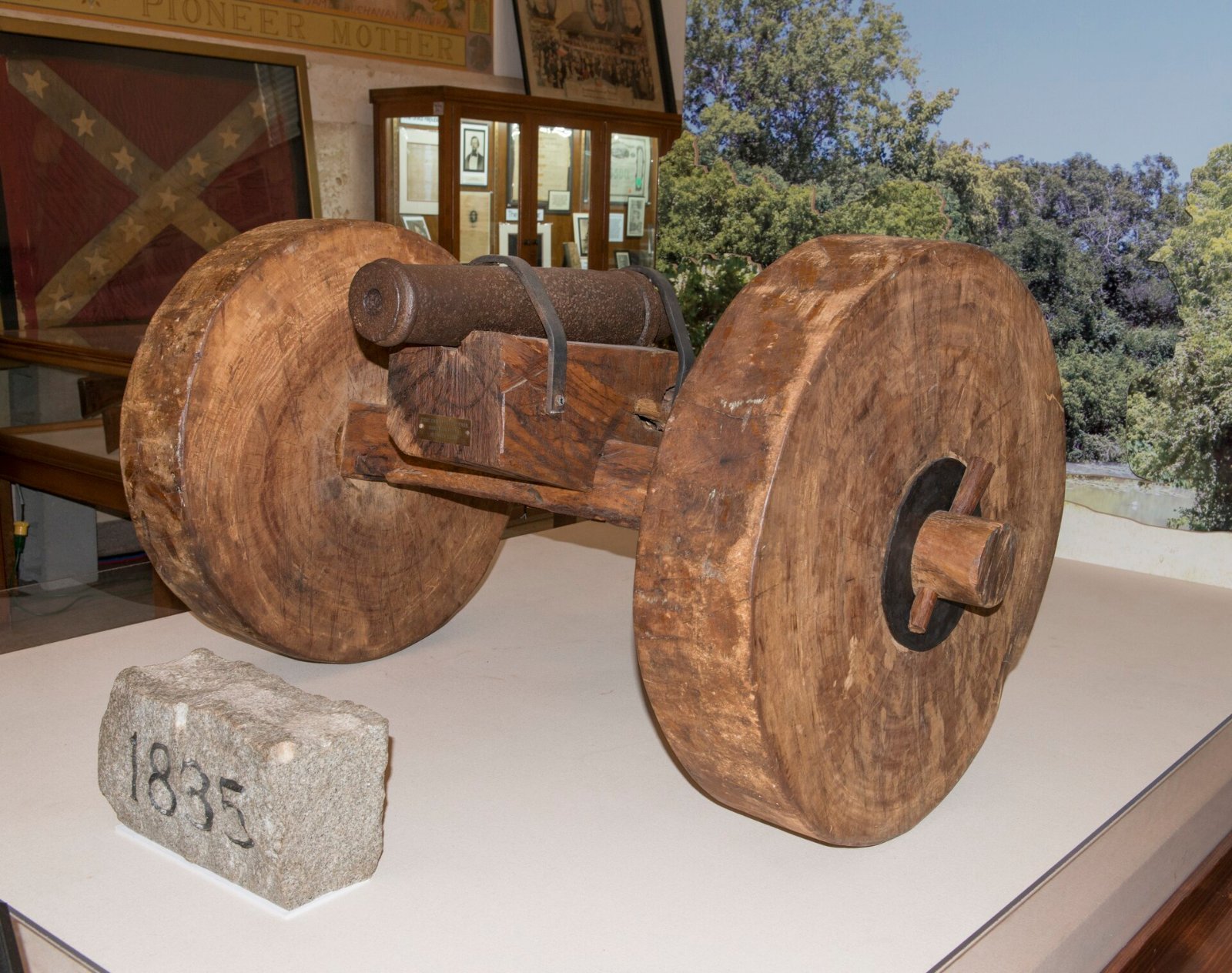
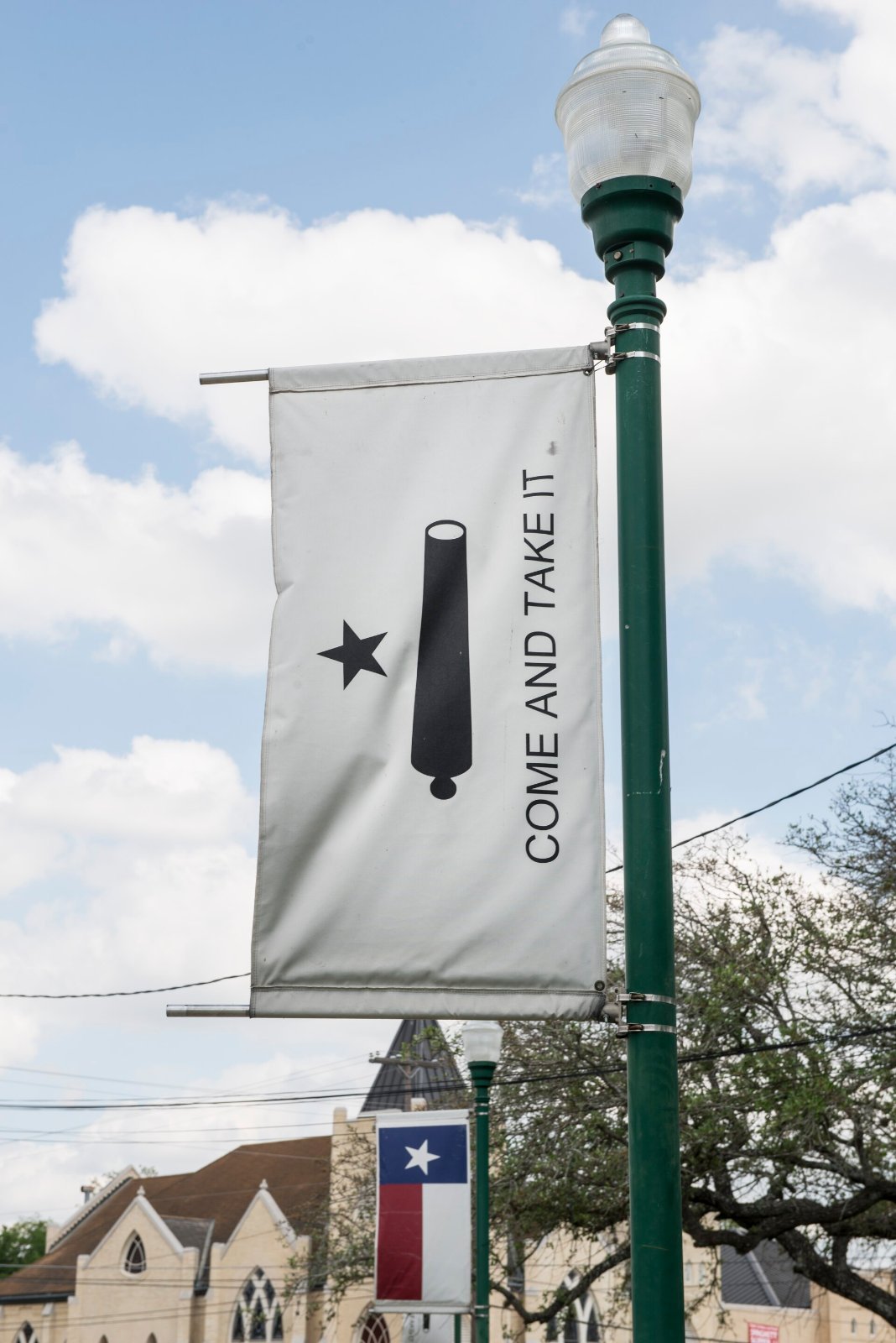
Gonzales had 18 men in town, remembered as the Old Eighteen. They stalled while volunteers rode in, and by October 1 the Texian force had grown to roughly 170 under John Henry Moore, according to History.com. Women in town made a flag from white cloth: a black cannon, a single star and the words COME AND TAKE IT. Most accounts credit Sarah DeWitt and her daughter Evaline; some name Caroline Zumwalt alongside Evaline.
On the night of October 1, the Texians crossed the Guadalupe River and closed on Castañeda’s camp in the fog. At dawn on October 2, 1835, Moore met Castañeda under a parley and refused to give the gun back. Then the Texians fired the cannon at the Mexican camp, and the Mexican troops withdrew. Two Mexican soldiers were killed. The Battle of Gonzales was small, but it was the first battle of the Texas Revolution, and within months Texas declared independence. The original flag was carried toward San Antonio after the battle and lost. Every Come and Take It flag you see today is a replica.
Molon labe vs. Come and Take It: same message, different fights
| Molon labe | Come and Take It | |
|---|---|---|
| Language | Ancient Greek | English |
| Origin | Thermopylae, 480 BC | Fort Morris, 1778; Gonzales, 1835 |
| Who said it | Leonidas, per Plutarch | Col. John McIntosh; the Gonzales settlers |
| What was demanded | The Greeks’ weapons | A fort; a cannon |
| Outcome | Spartans killed, Persians won the pass | British pulled back; Mexican troops withdrew |
| Recorded | About 500 years later | At the time, by participants |
One detail people miss: the Spartans lost. So the real molon labe meaning isn’t a victory slogan. It’s what you say when you know the odds and you’re staying anyway. Come and Take It carries the same spirit with a better scoreboard. Both say the same thing about the person wearing them: I don’t hand over what’s mine because somebody told me to. If that’s your speed, our guide to the Marine Corps birthday and Veterans Day covers the people who’ve backed that up for real.
Molon labe shirts and Come and Take It tees
Our Molon Labe Spartan Tee puts a battle-worn Spartan helmet draped in the American flag front and center. Leonidas meets 1776. Printed to order in the U.S., unisex fit.

The Come and Take It Tee runs the Gonzales dare in bold, battle-worn lettering arched across the chest. Want it for colder months? The Come and Take It Hoodie keeps the Stucci logo up front and puts COME AND TAKE IT across the back, so it says it coming and going.

Built for the same crowd:
- 1776 Second Amendment Tee: distressed gold 1776 over an AR-15, a tattered flag and a bald eagle
- Don’t Tread on Me Tee: the Gadsden rattlesnake, coiled and ready
- Forged Spartan Tee: a cracked Spartan helmet on black for anyone who holds the line
- The full patriotic t-shirts and hoodies collection
Molon labe meaning FAQ
How do you pronounce molon labe?
Most Americans say MOH-lohn LAH-veh or MOH-lohn LAH-beh. Modern Greek pronounces the b as a v. Either one gets the point across.
What is the molon labe meaning in English?
Come and take them. The literal Greek is “having come, take,” and “them” refers to the weapons Xerxes demanded.
Is Come and Take It the same as molon labe?
Same message, separate origins. Molon labe is Greek and dates to 480 BC. Come and Take It is American, from Fort Morris in 1778 and the Gonzales flag in 1835.
What does the Come and Take It flag mean?
It dared Mexican troops to take back the Gonzales cannon in October 1835. Today it stands for refusing to give up your arms or your rights, and it’s a symbol of Texas independence.
Did the Spartans win at Thermopylae?
No. The Persians got around the pass and Leonidas and his men were killed. The delay and the example helped rally Greece, which beat the Persians at Salamis later that year and at Plataea in 479 BC.
Wear it like you mean it
That’s the molon labe meaning and the Come and Take It meaning side by side: two words from Sparta and four from Georgia and Texas, all saying the same thing. If you’re the kind of person who doesn’t fold when somebody makes demands, put it on your chest. Shop the Stucci Apparel patriotic collection and grab the Molon Labe Spartan Tee or the Come and Take It Tee. More symbol breakdowns live in the Journal, starting with what the valknut means.
Sources
- Molon labe, Wikipedia (grammar, Plutarch’s Moralia 225D, 1955 Thermopylae monument, I Army Corps, SOCCENT)
- Did Leonidas say molon labe at the battle of Thermopylae?, Bad Ancient
- The Fort That Refused to Surrender: Fort Morris, Georgia Trust for Historic Preservation
- The First Shots of the Texas Revolution, History.com
- Come and take it, Wikipedia (Fort Morris, McIntosh’s sword, Gonzales flag makers and fate)
Stucci Apparel makes statement graphic tees printed to order in the U.S. We don’t do halfway, and that includes getting the history right.